
Kanazawa, the capital of Ishikawa prefecture, is a very pleasant relaxed city at the north-west coast of Japan. For its size it offers a lot of beautiful historical sights, contemporary architecture and world class museums.
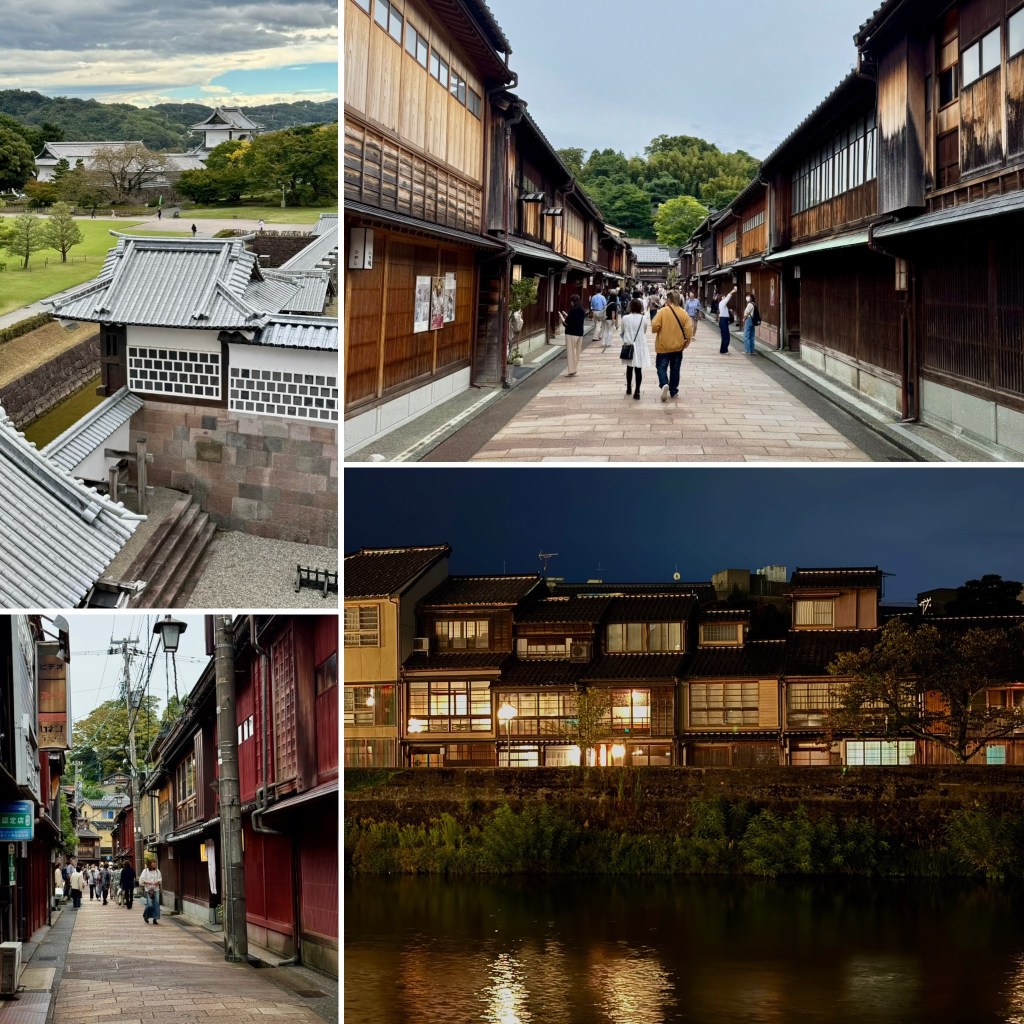
One of the highlights is the Kenroku-en, considered one of the three most beautiful gardens of Japan, along with Kairaku-en in Mito and Koraku-en in Okayama. If that is true is up to debate, but it sure is a beautiful garden to visit. In this post I will also talk about three smaller gardens in Kanazawa. First a beautiful magical little garden, belonging to one of the historical homes in the Samurai district. We also have a small look into the contemporary contemplative garden of the D.T. Suzuki museum and last, but not least the Shofukaku Teien garden.
Kenroku-en
Kenroku-en used to be part of the extensive castle grounds in the centre of Kanazawa and it was founded in the Edo Period (1603 – 1868) by the feudal lords of Kaga, more specifically the Maeda clan. It is an extensive strolling garden with ponds, streams, tea houses and even artificial hills.

The current name of the garden was given in 1822 and translates as “Combined” (Ken) “Six” (roku) “Garden” (en) to mean the “Garden of Six Attributes” . Six attributes as a synonym for an excellent landscape garden are spaciousness & seclusion, artifice & antiquity, water-courses & panoramas. These elements are quite often opposites and so it is quite rare to have all these elements in just one garden.
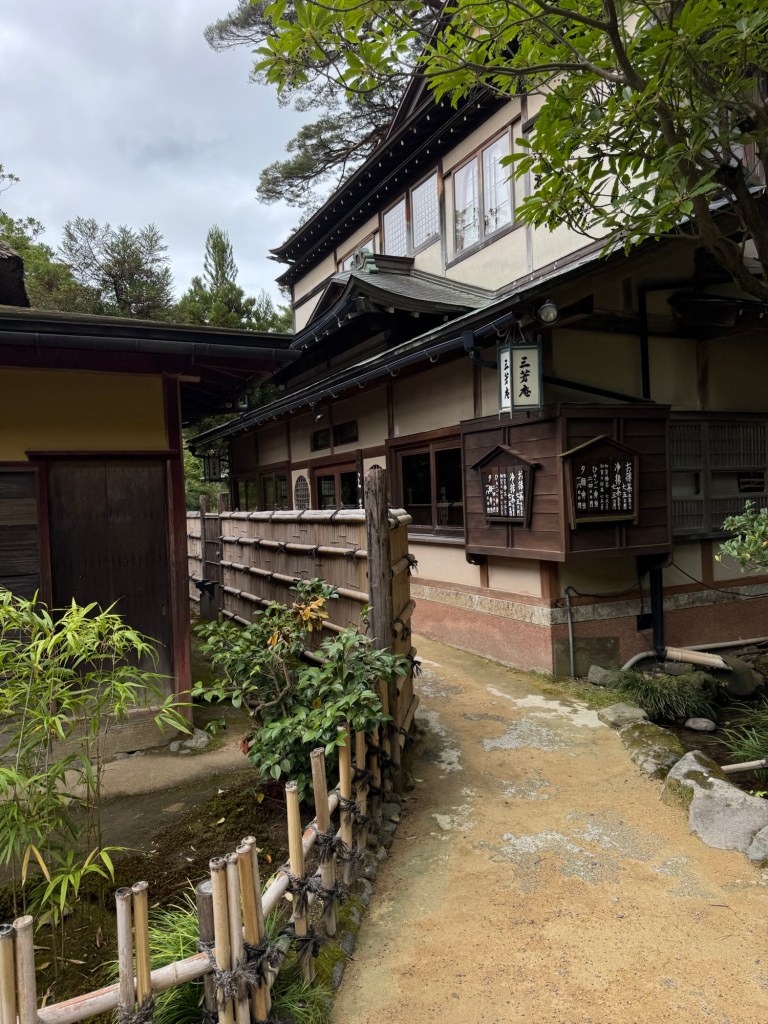
If we look at the first pair, spaciousness & seclusion, we can easily find both in Kenroku-en. The Openness of the large central pond and even the vistas over the city give a real sense of space. But around the hills there are very intimate and secluded spaces.
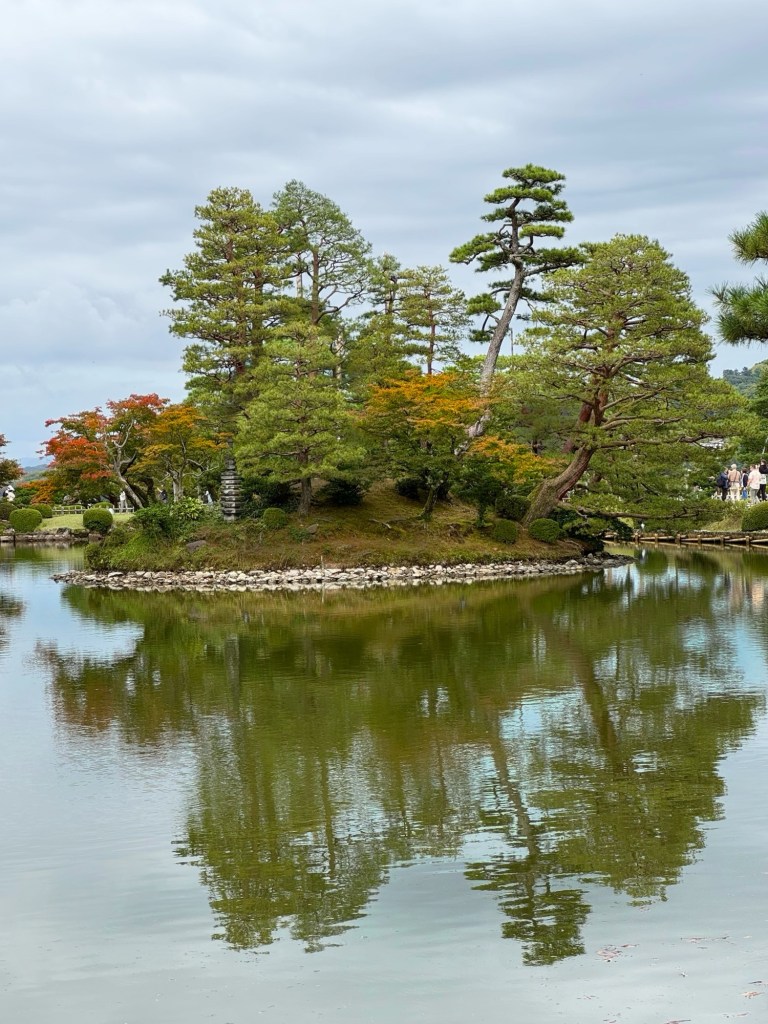
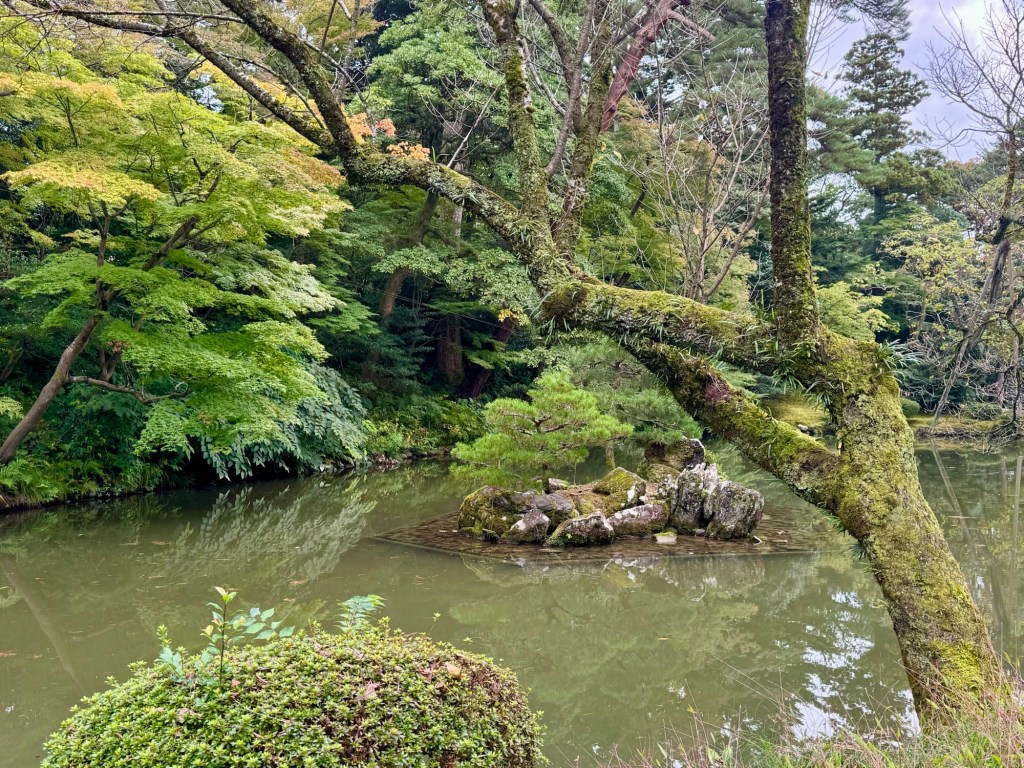
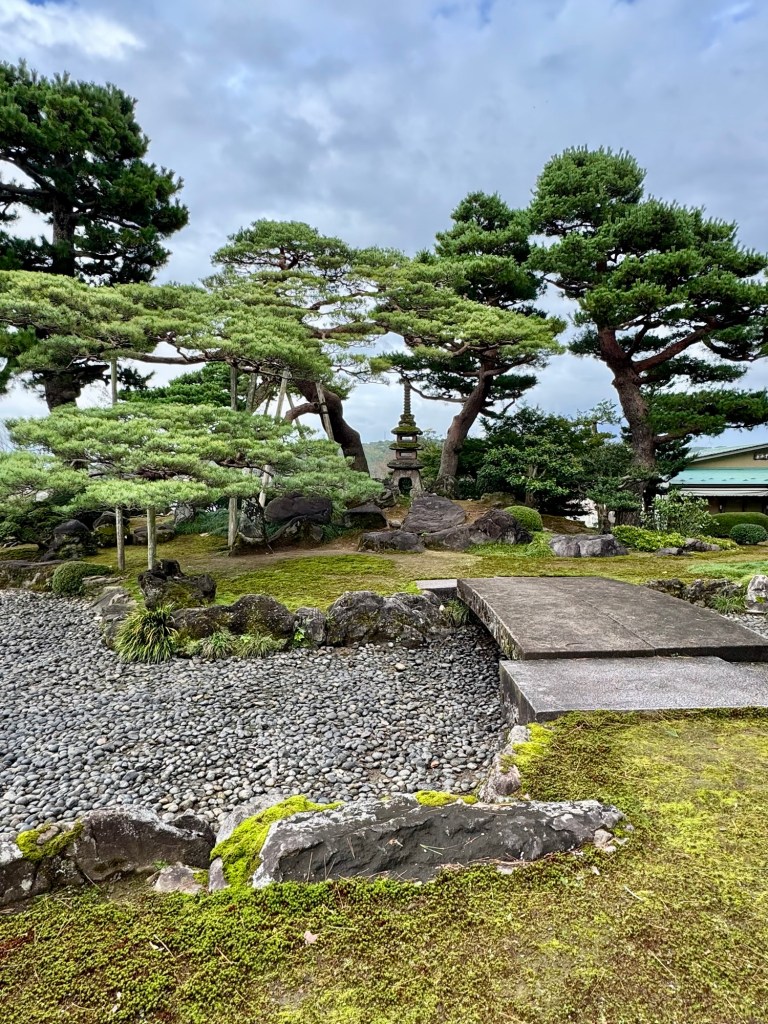
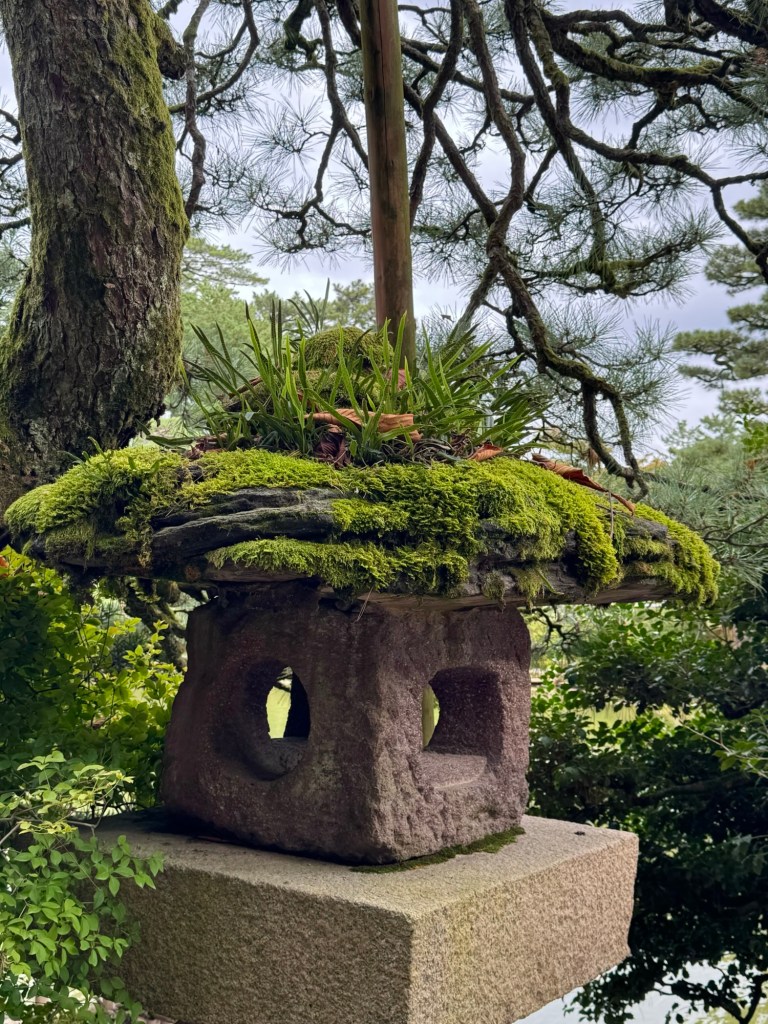
When we look at the Artificial aspect it is clear this whole garden is carefully thought out and constructed. The rocks are carefully placed, the trees trained and trimmed, but still it all feels like ‘natural’. Nothing feels forced. Let’s say it is some kind of an enhanced natural landscape, which is not easily created. Even the lanterns, teahouses and bridges seem all in harmony with the surrounding landscape. One of these lanterns is the Kotoji-tōrō, a lantern standing on two legs and representing the bridge of a Koto, a Japanese string instrument. It has become the symbol of the garden.
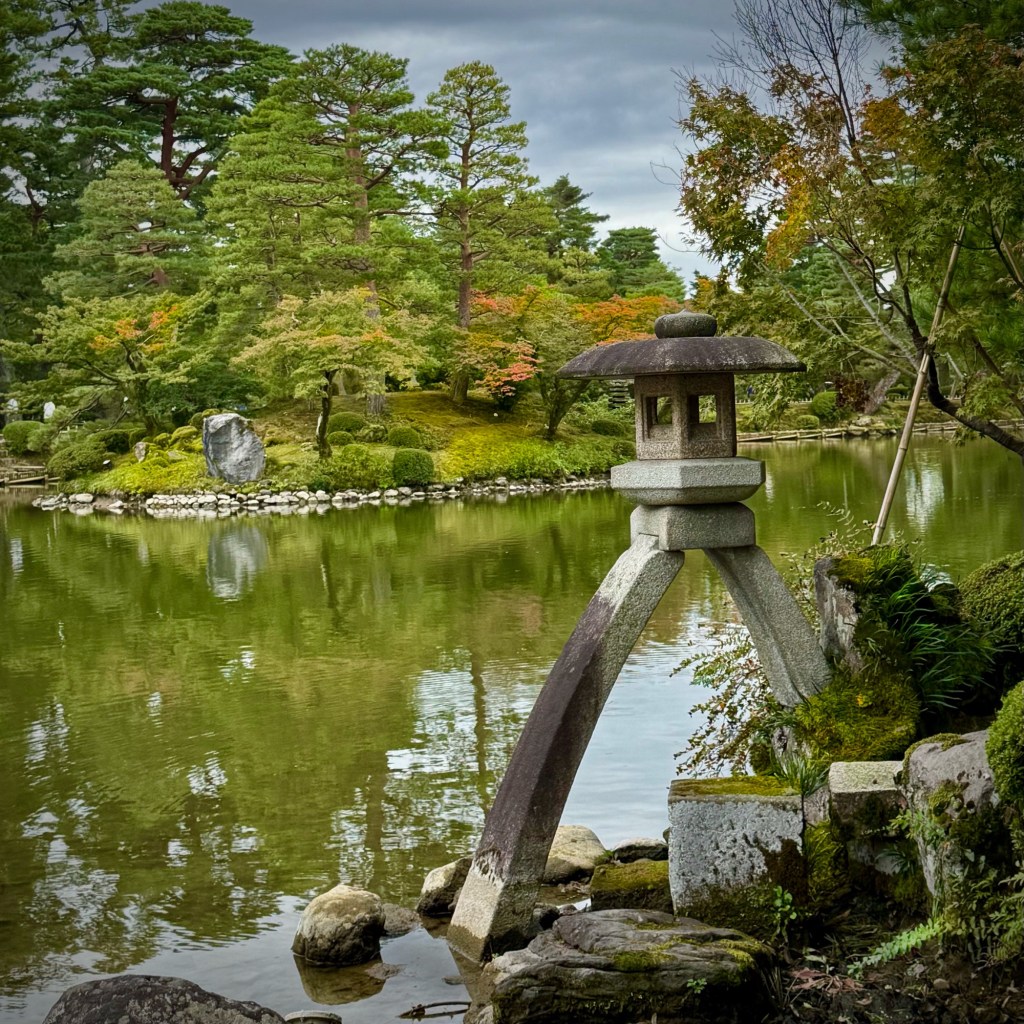

Water and panoramas are plenty in this garden, with large ponds, little streams and waterfalls. You’ll even find the oldest fountain of Japan here in the garden. All this water features are fed by a canal that used to foresee the castle grounds with water. Because the garden is on a height you have magnificent viewpoints.

Unfortunately we were unable to climb some of the artificial hills when we were there because of the damage done by the big earthquake at the beginning of 2024.
For me the main attraction of the garden are some of the magnificent trees. The Neagari-no-Matsu, raised roots pine, was planted an artificial mound. As soon as the roots were strong enough, the mound was carefully removed, exposing the beautiful root system.

The Karasaki Pine Tree is another beautiful tree, planted next to the pond. In Autumn they prepare the tree for winter with a technique that is called Yukitsuri. Ropes are attached in a conical array to carefully support tree branches in the desired arrangements, thereby protecting the trees from damage caused by heavy snows. When we visited the garden they were just starting to install these structures and it was a very interesting ritual to observe.
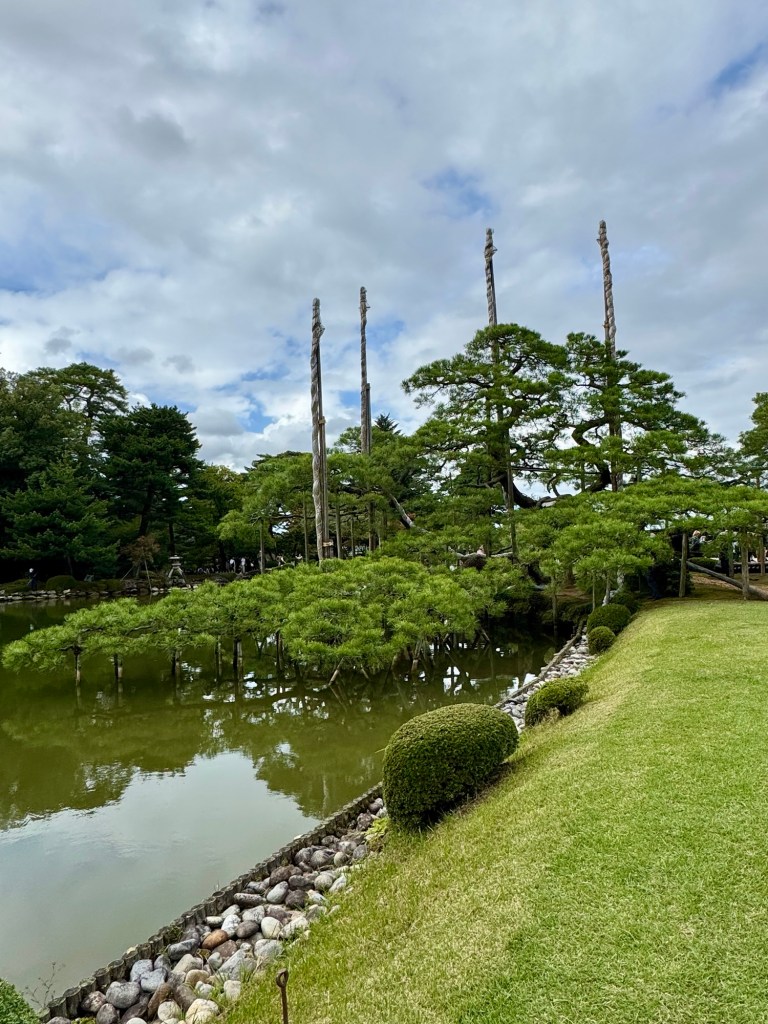

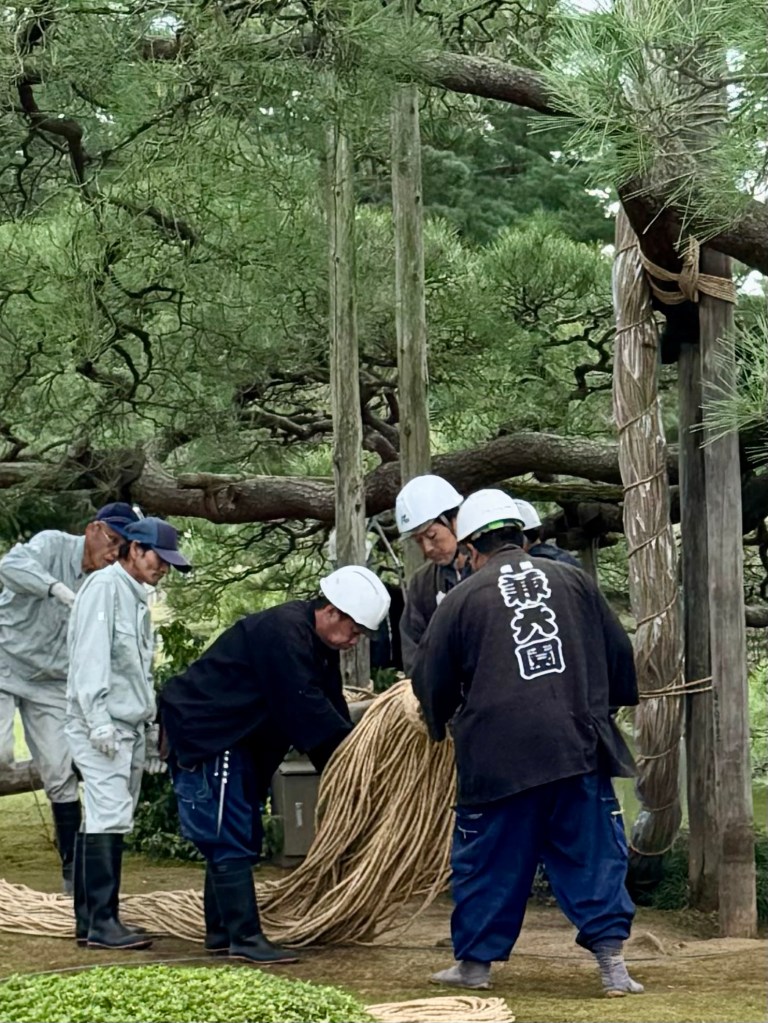
When you visit Kenroku-en, don’t forget to also drop by Seisonkaku Villa, a house that 13th lord of the Maeda family built for his mother in Kenroku-en Garden in 1863. But let us continue our journey to the next garden, the garden of the Nomura house. The contrast in size can almost not be bigger, but definitely not inferior in beauty.
Nomura House & Garden
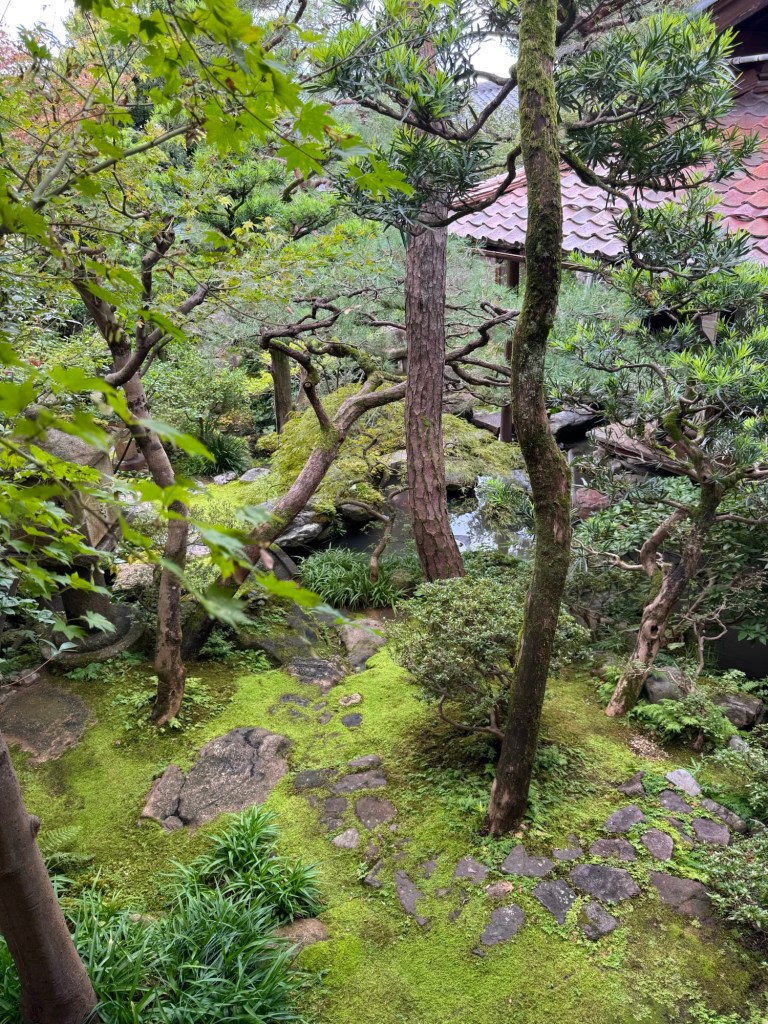
The house and garden we visit here belonged to the wealthy Samurai family Nomura. But in the mid-19th century the old social class system came to an end and the Nomura family house started to fall into ruins. At the beginning of the 20th century a rich industrialist bought the house and land and rebuilt the property and its garden. The drawing room was carefully transferred from an old house in the countryside. What is so pleasant about this house is how from almost every room it overlooks a beautiful inner garden.
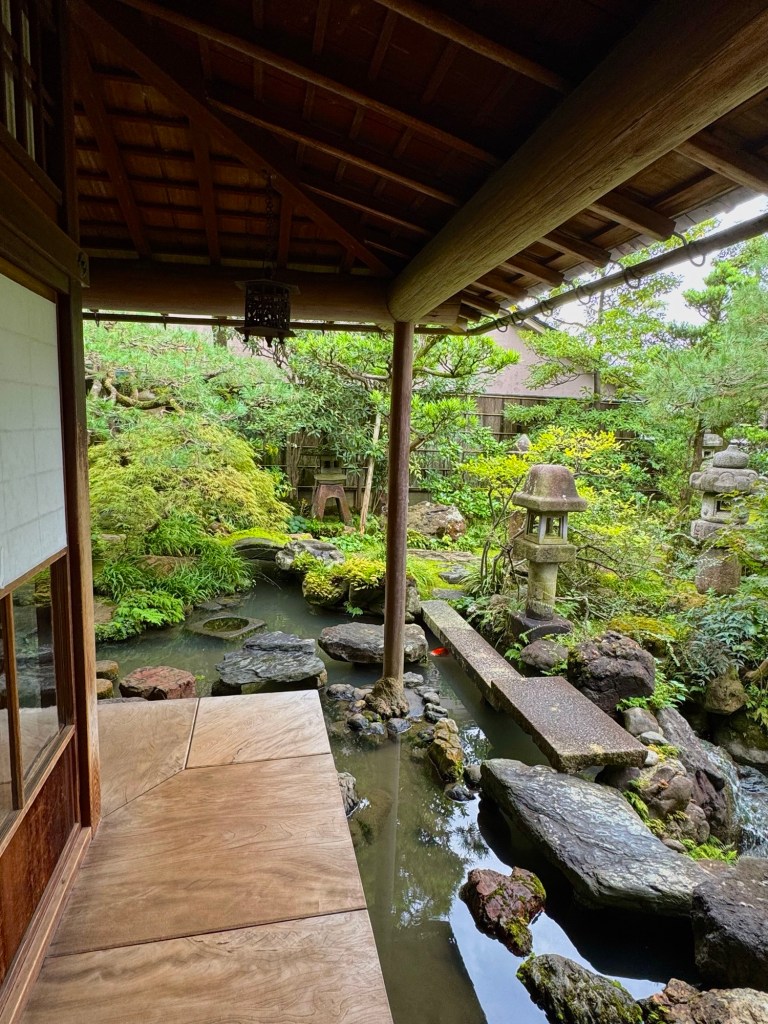

The garden is really an exquisite example of Kobori Enshu style. Although this garden is not designed by Kobori Enshu himself, it definitely has lot of the style elements. Enshu was famed for his harmonic brilliance and an aesthetic known as kirei sabi, and it gets away from he more austere wabi-sabi style. There are added more ornaments and there is less unused space.


It is just so calming watching the garden, with its koi pond and rushing streams from the wooden porch, admiring all the different elements and the lush greenery. One of the oldest trees in the garden is a 400-year-old Myrica tree, which is supposed to not grow easily in this part of Japan, but he seems quite happy here.
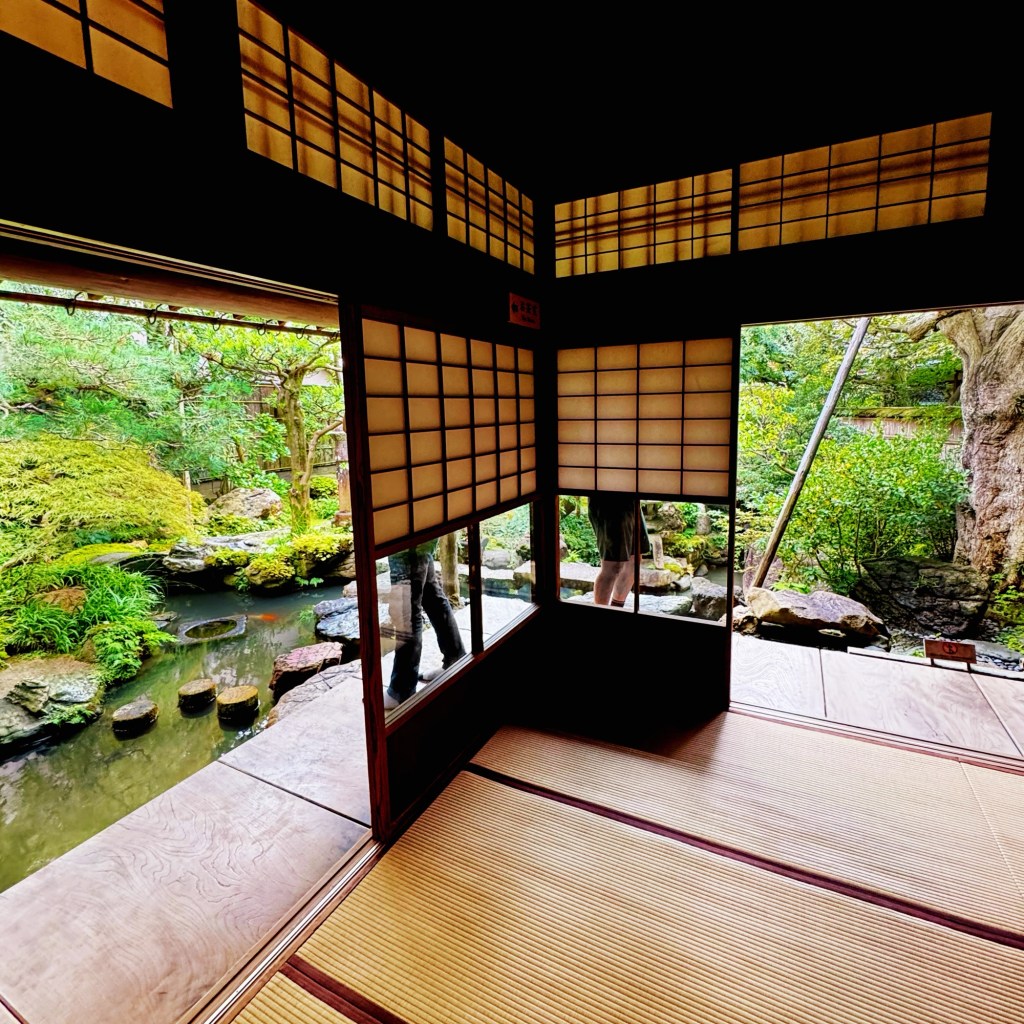

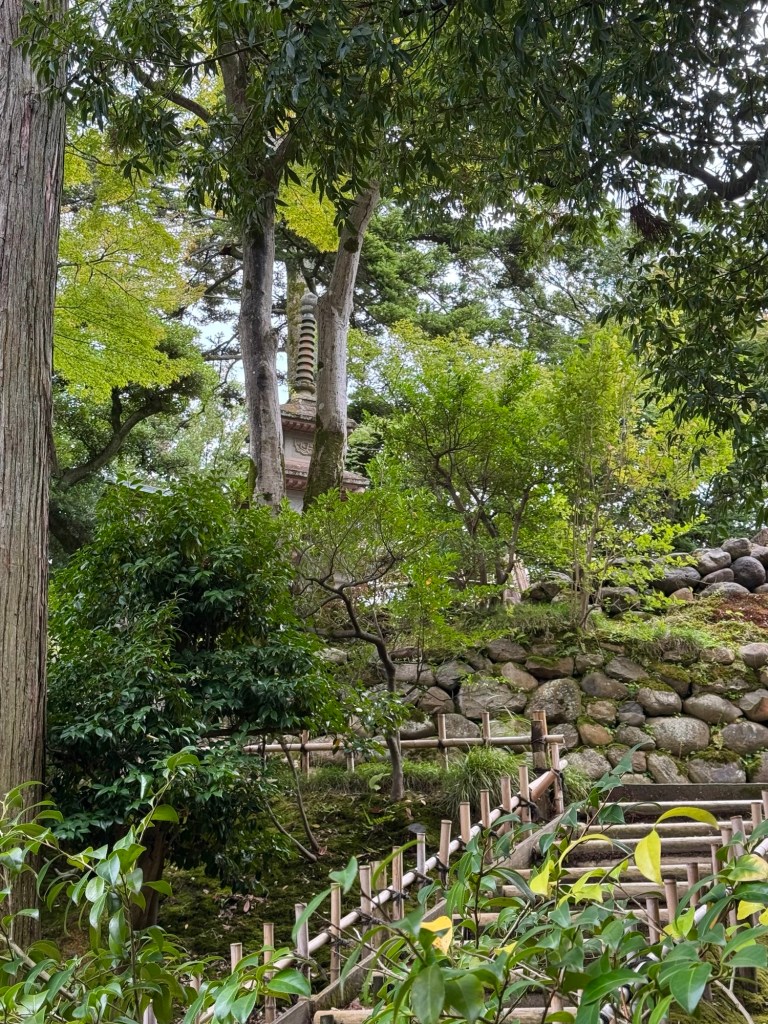
Don’t forget to get up the Rocky stairs to also have a view from above. For me this was surely one of my favourite gardens of the trip and that all in the beautiful setting of the atmospheric old samurai district.

But now for something completely different…
D.T.Suzuki museum
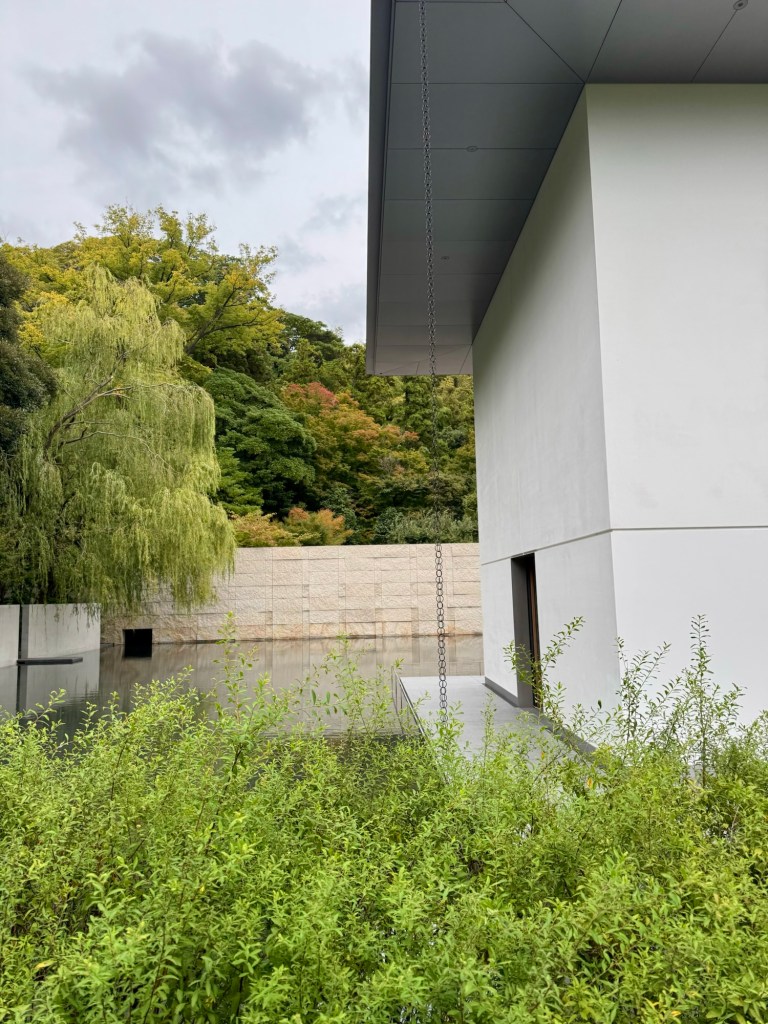
This museum is a place to commemorate the life and work of Suzuki Daisetz Teitaro (1870-1966) an important Japanese Zen philosopher who was born in Kanazawa. And although you can learn about his writings and philosophy in the small museum space, it is more of a contemplative space. The minimal architecture by Yoshio Taniguchi is truly stunning.

There are actually 3 different ‘garden’ spaces. When you enter you see the vestibule garden with a camphor tree at its center. Near the learning space you have a small roji garden that you can admire from two chairs inside.

The main attraction though is the water mirror garden. The contemplative pavilion is right in the middle of this secluded mirror pond. Behind the walls you see the greenery from the surrounding forest. On given times a small bubble appears in the water mirror to make small ripples on the surface. It’ amazing how you can instantly feel the calm and zen philosophy by sitting in this space.


For our last garden we just have to put a few steps outside the D.T. Suzuki museum.
Shofukaku Garden
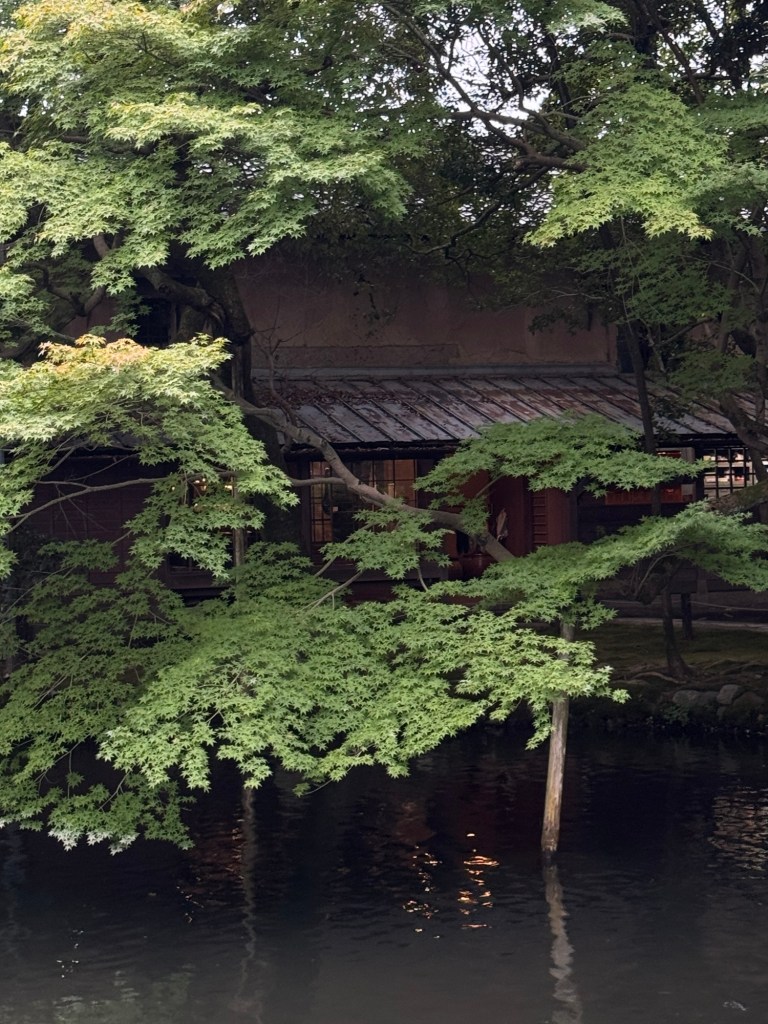
A bit hidden next to D.T.Suzuki museum you’ll find the beautiful Shofukaku Garden. It is older than the big Kenroku-en and used to be the garden of the Mr. Honda, the chief retainer of the Kaga clan. It is a traditional Japanese garden, but to be honest I couldn’t find back much on it. It dates back to the do period


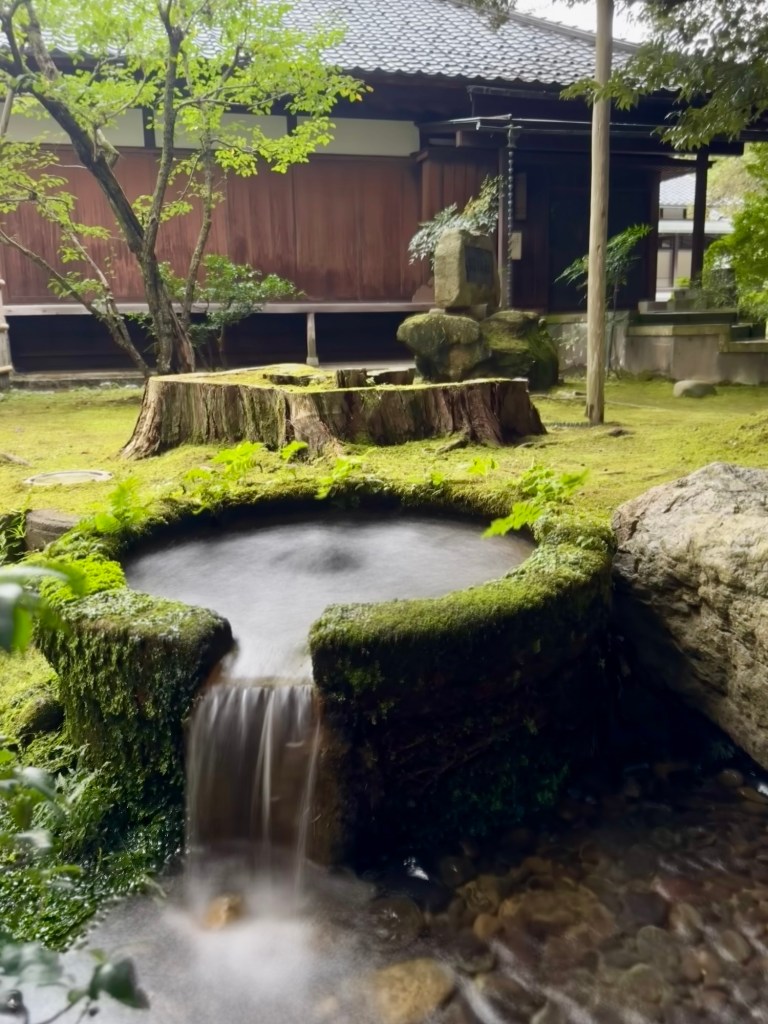
It has a beautiful shaded pond with a moss covered small forest next to it. Also interesting is the old spring.
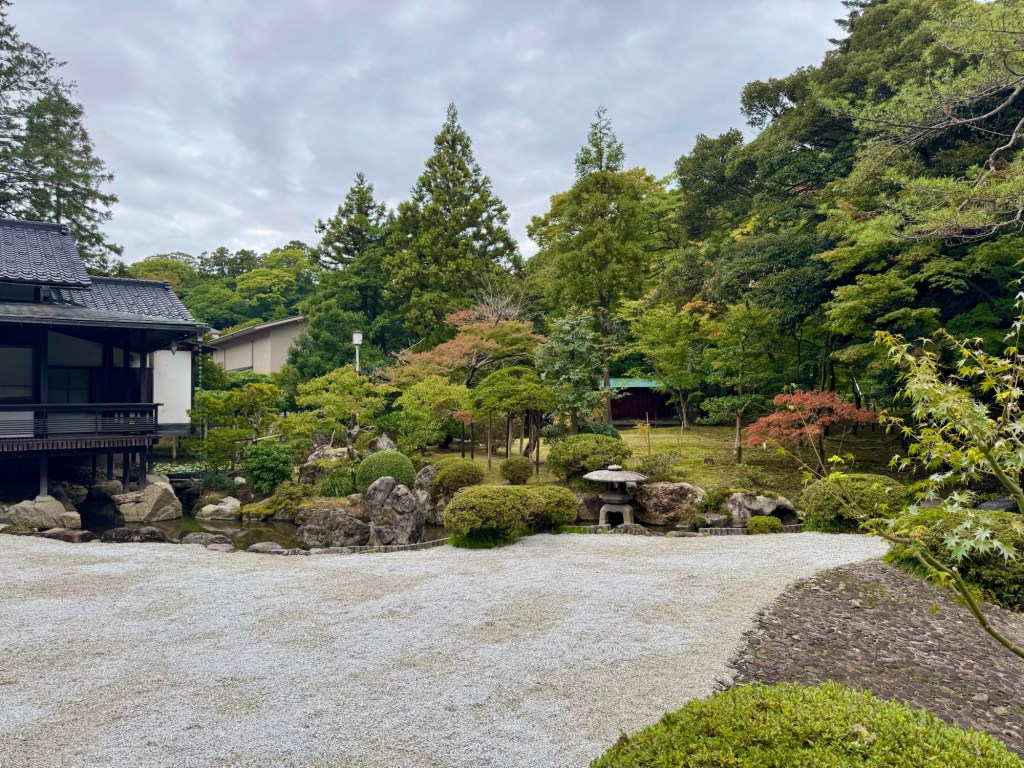
So this was a small tour along some of Kanazawa’s gardens. Of course this is not a complete guide, so if you have the chance to visit this beautiful city one day you might find plenty more things to see.
 Springhill Stories
December 6, 2024 at 19:33
I think I would enjoy a visit to these gardens very much. They are a contrast to the European style of gardening and interesting for that. The manner in which the trees are grown, trained and maintained is very interesting though I find it a little too artificial for my liking. Many thanks for your very interesting report and photographs!
LikeLiked by 1 person