One of the most pleasant strolls in Kyoto is along the Tetsugaku No Michi, better known as the Philosopher’s path. This path follows a cherry tree lined canal between Ginkaku-Ji (the silver pavilion) and Nanzen-ji temple complex. And although it already opened in 1890, it only got called philosophers path because of two 20th century philosophers Nishida Kitaro and Hajime Tanabe, who used this path on a daily basis. It’s along this path that I’ll take you to 4 temple gardens that are well worth visiting.

Ginkaku-Ji
We start our journey at one of my favourite temple gardens in Kyoto : Ginkaku-ji, also known as the silver pavilion. This place has its origins in 1482, when Ashikaga Yoshimasa, the eight shogun of the Muromachi era (1336-1573) began construction of his retirement villa. He wanted to rival the golden pavilion that was built by his grandfather. The original idea was to cover it completely in silver leaf, but because of a war this was never realised. Yoshimasa later ordered to convert the villa into a zen temple after this death and so it became the Jishō-ji.


The garden surrounding the temple is said to be designed by Sōami, a known landscape designer and painter. In the center of the garden is the Kinkyo pond and many of the stones and pines that were brought into this garden were actually reclaimed from properties that were destroyed by civil war.


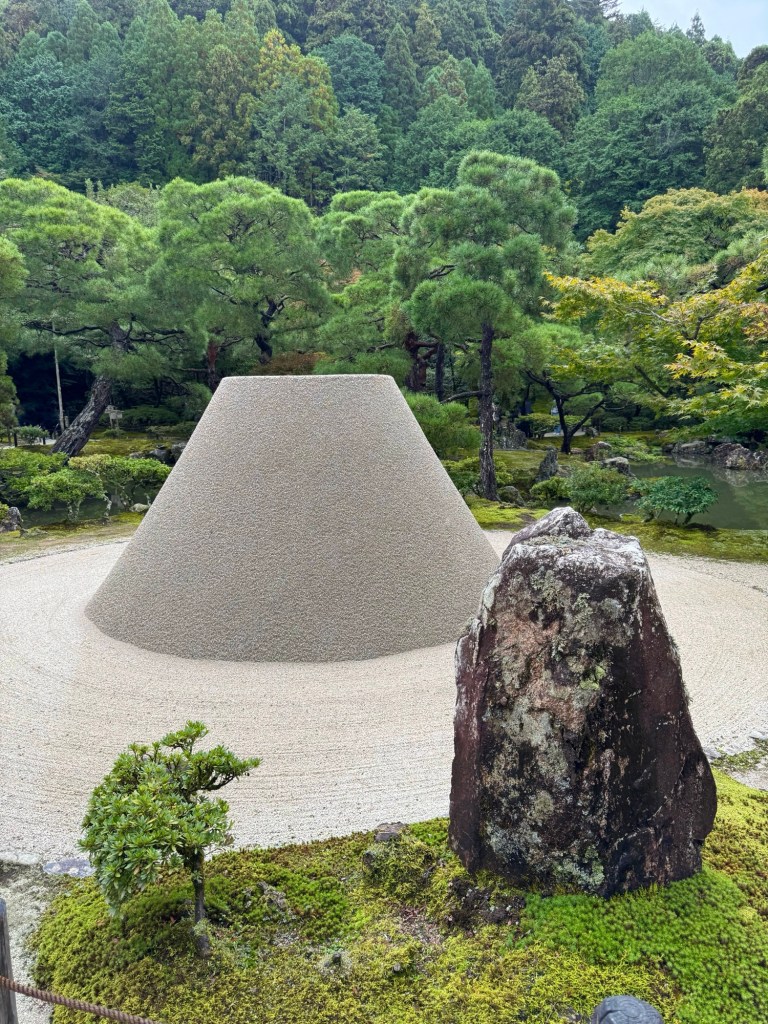
When you enter the garden you encounter several beautiful dry sand elements, of which the most famous is the huge cone. This cone is also known as Kōgetsudai, the moon viewing platform, is said to be based on Mount Fuji. The wavy patterns in the vast white sand surface are believed to resemble Lake Xī Hú in China.

But what most speaks out to me in this garden is the use of different species of moss, covering almost the whole garden. Moss is considered it is a symbol of age, harmony and tradition in Japanese culture and is often found in their gardens.
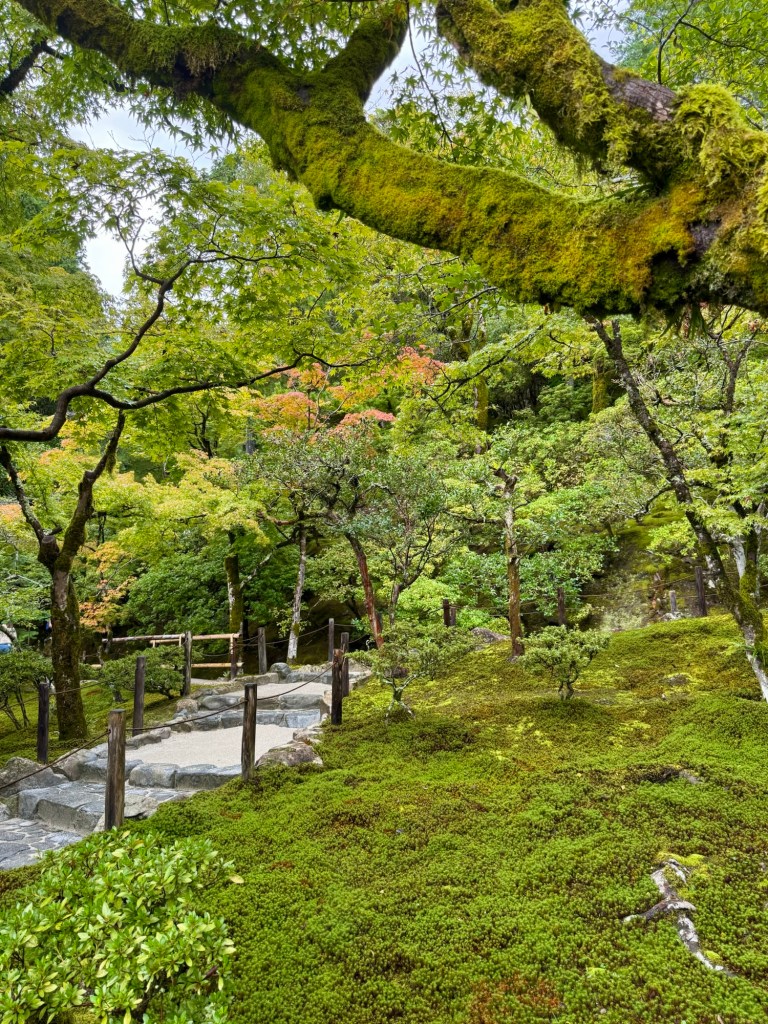


This is a truly magical place and it’s a delight walking up the mountain and seeing Kyoto and the garden at your feet. The garden is not completely reflecting the Zen culture, as it was originally designed for the shogun and was more for aesthetics than for meditation, but nevertheless through its elegant and detailed design you get an instant feeling of calm coming over you.

Although it was very tranquil when we visited, it can get crowded on some days. So if you want to feel the calmness of the garden, try to come early. For now we leave Ginkaku-ji and head to the philosopher’s path. About 500 meters from the start of the path we get off to the Hōnenin Temple.
Hōnenin Temple
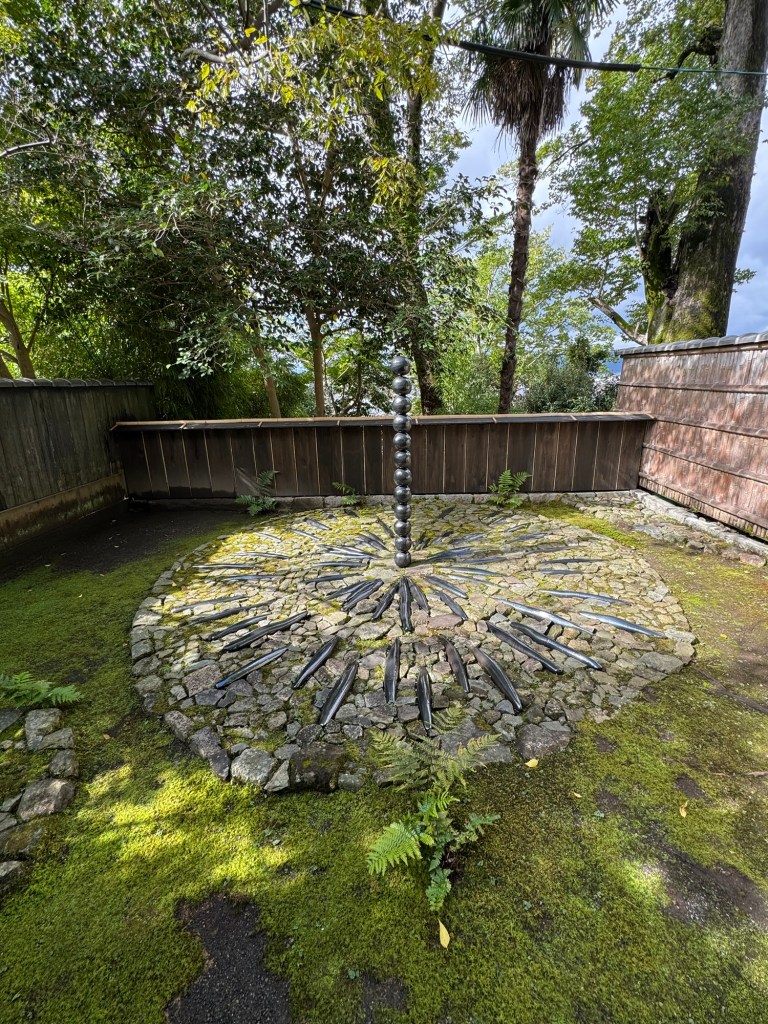
When approaching the temple grounds you will already see a more contemporary garden where crystals are dotted within a grave garden

The real showstopper here is the entrance gate. This simple structure has a thatched roof covered in moss. Once inside you are greeted by two mounds of sand, carefully sculptured and ornated with different patterns, following the seasons.


A bridge takes you over a pond to the main buildings that are surrounded by camellias. Also worth mentioning is a large stone stupa and a contemporary version behind it.


Let’s head back out and walk to our next destination. On the way to Eikan-dō Zenrin-ji don’t forget to make a quick stop at the small, but nice Ōtoyo Shrine.
Eikan-dō Zenrin-ji
Another truly remarkable temple complex. This one is mostly known for its incredible autumn colours, but has a lot more to offer. The history of this place starts in 853, when monk Shinshō bought the lands to build a temple. It was however forbidden to do so in that time and so it took another 10 years to get permission of Emperor Seiwa. Zenrin-ji has grown famous for the unusual statue of the Amida Buddha, which looks over its shoulder, rather than straight ahead.
When you enter the temple complex, one of the first buildings you pass is the Shaka-do, the priest quarters with some beautiful screens and surrounded by a pond garden, a dry sand mound and a small rock and gravel garden.

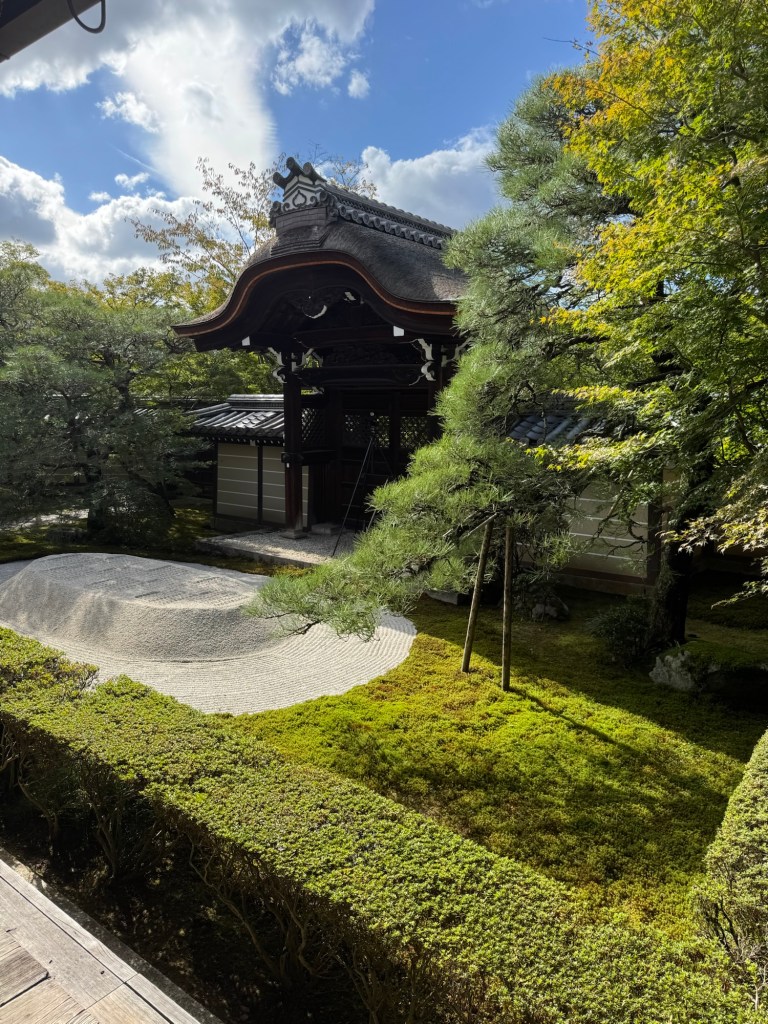
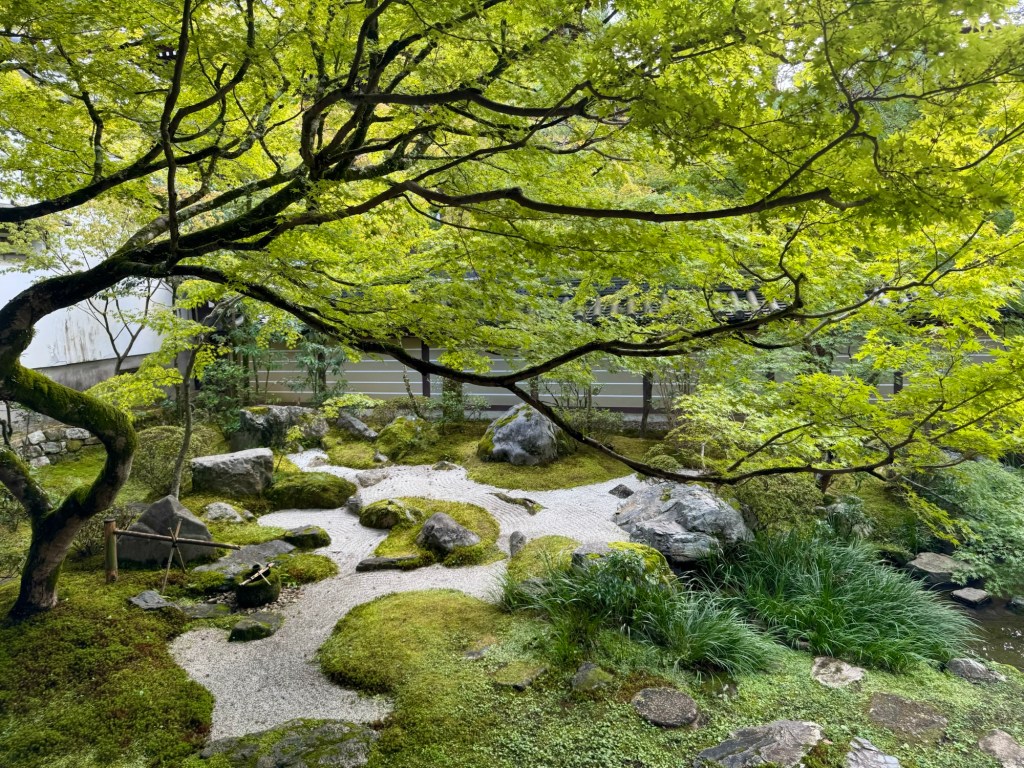
The main temple buildings are all connected with beautiful covered corridors and stairs that bring you up into the trees. One of the trees you’ll pass on the way to the Amida Buddha building is an old pine that has needles that split in 3. They represent knowledge, mercy and sincerity. If you have one of those needles, it is said you will get these 3 blessings.

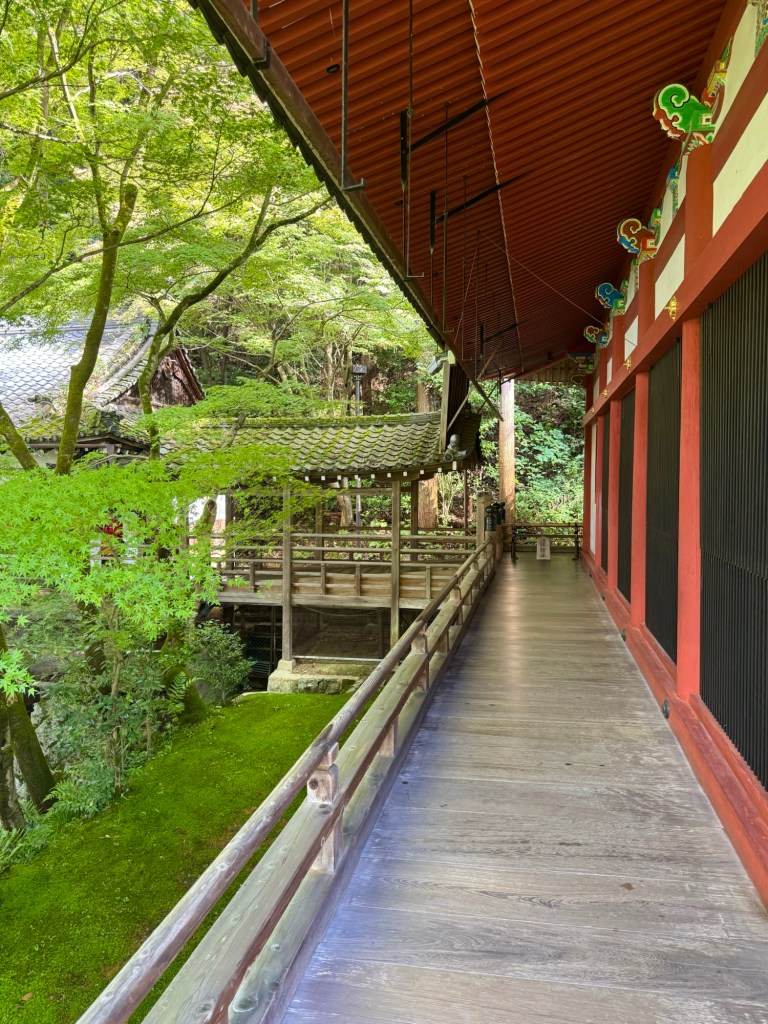

A wooden staircase following the mountain slope will bring you higher up and into the trees. This staircase is called Garyuro (sleeping dragon) because of its shape.
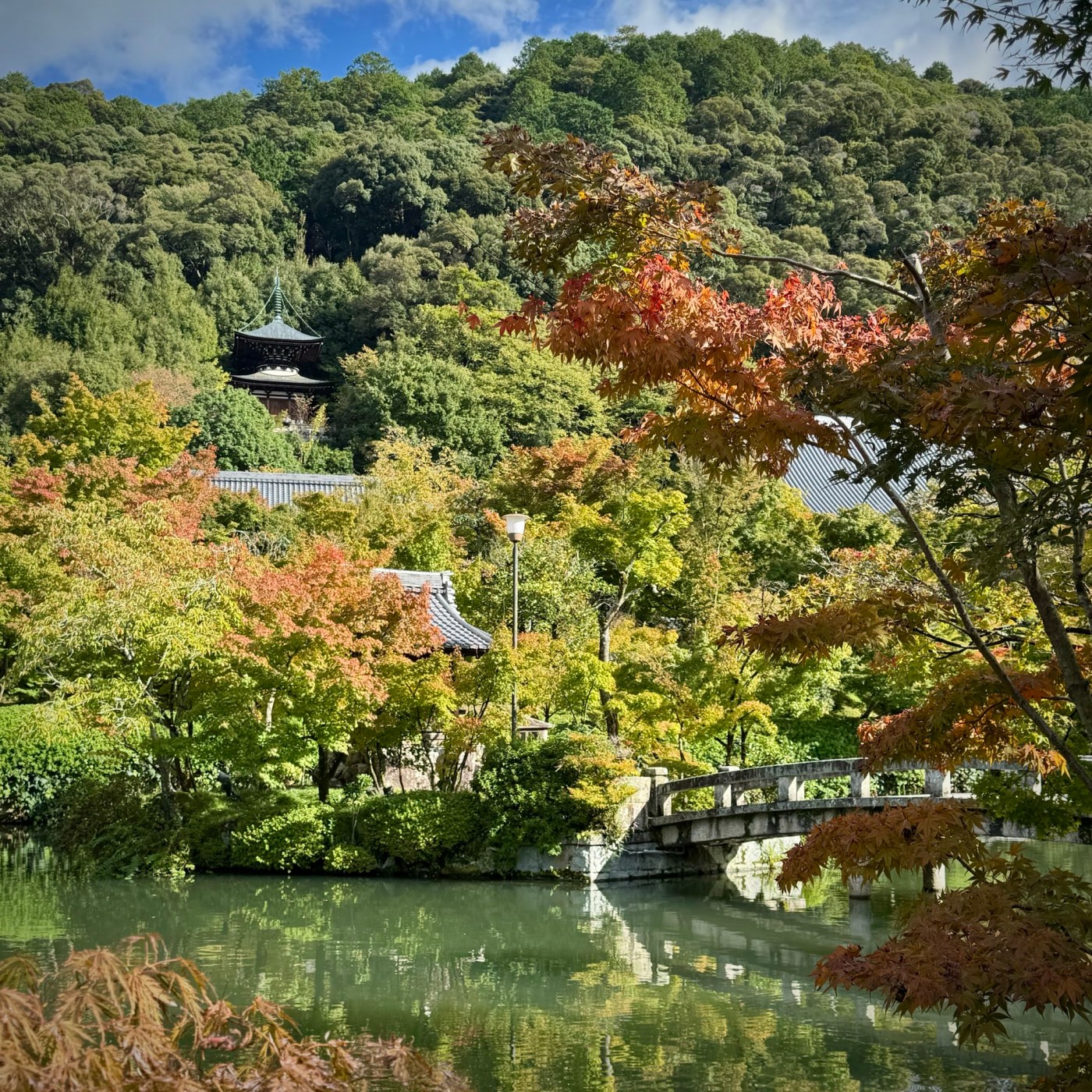
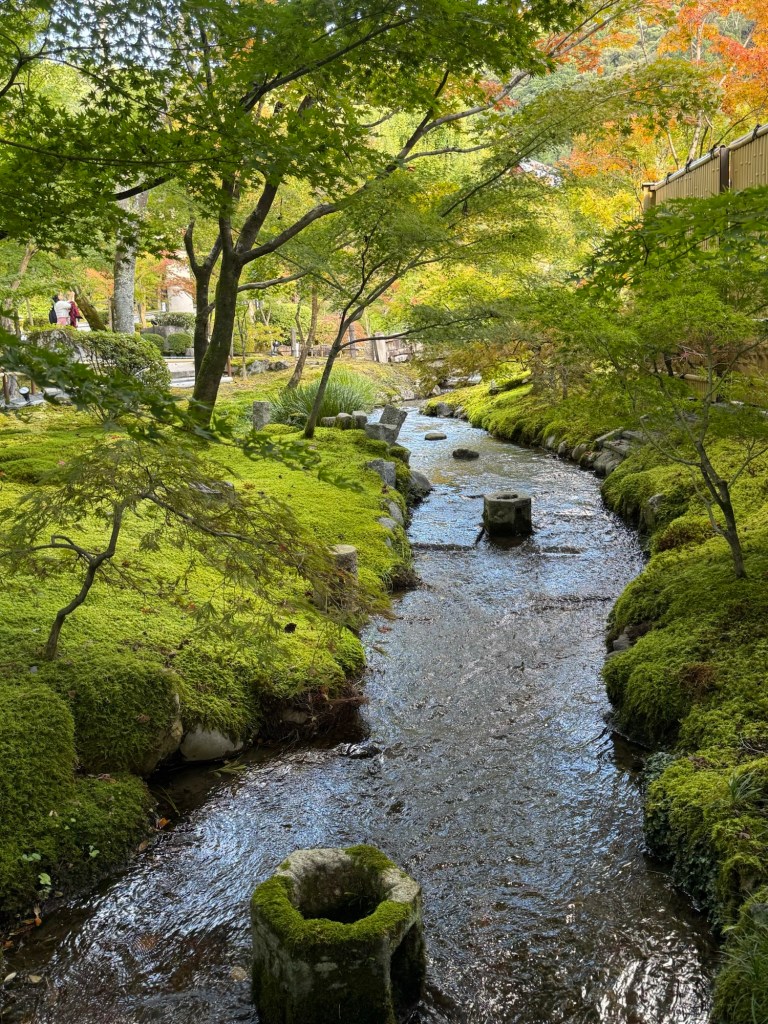
On the highest point of the temple grounds you’ll find a pagoda that hoovers over the grounds and down is another highlight. A large pond surrounded by Japanese maples and a large stone bridge. Several small streams go in and out the pond. It’s the ideal place to have a tea with a sweet delight.



And now we head to our last destination Nanzen-ji… or not exactly.
Nanzen-Ji (Tenjuan sub temple)
So our last destination is the Nanzen-ji temple complex, where you are immediately greeted by the enormous wooden Sanmon entrance gate. Nanzen-ji is one of the most important Zen buddhist temples in the whole of Japan and is a vast complex with several sub temples. It dates back from the 13th century, but most buildings were destroyed during the civil wars of the late Muromachi Period and than rebuilt. For a real zen rock garden you head to the Hojo, the main hall. But we chose to visit the lesser visited but beautiful gardens of the Tenjuan sub temple.

The Tenjuan temple was established in 1339 and was dedicated to the Zen master who served Emperor Kameyama. The buildings were destroyed in the Ōnin War (1467-1477) and rebuilding took place in the 16th century.

The first garden you come across is the Higash Tei (east garden), a kare sansui (Japanese dry) garden designed by garden designer Kobori Enshu in the Edo period. The path in geometrically designed stone that connects the main gate to the main hall is the oldest part of the garden and dates back to 1338. It’s funny how the most modern looking part is the oldest element of the garden.


The black pine tree surrounded by moss represents an island with forest, while the white gravel with a wave pattern represents the sea surrounding it.
When you enter the Nan Tei (South Garden), a pond garden it is like entering a secret garden. With its small waterfall, zig zag bridge and stepping stones, it slows you down walking around the pond. This part also dates back to the 14th century. Especially beautiful is the tsukubai (water basin ) in stone covered with moss.

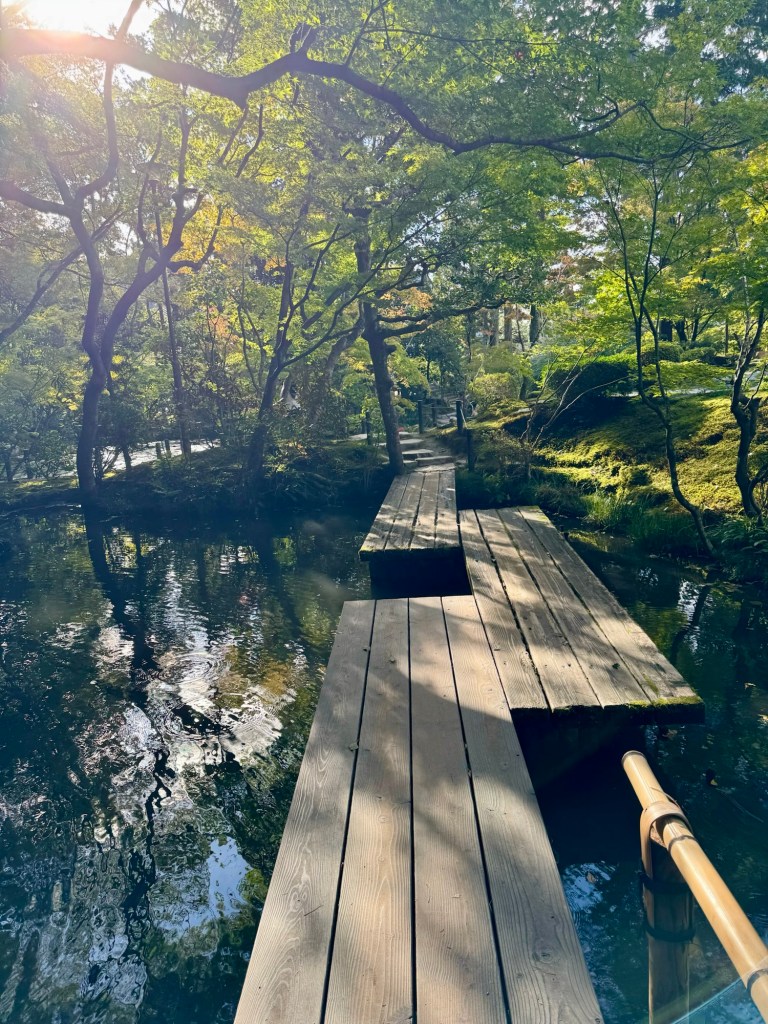


Also this garden is famous for its old maple trees that give a colourful show in second half of November.
And with this last garden we end our walk. Soon I will take you to more beautiful Japanese gardens.


November 20, 2024 at 13:41
A marvellous report on your visit, both text and photographs! You must have been out very early in the day to get so many excellent photographs without the presence of people.
LikeLike
November 20, 2024 at 13:51
Well to my surprise it was very calm in most of the temples along that route., Quite the contrast with the crowds at the golden Pavilion and some other temples.
LikeLiked by 1 person
November 20, 2024 at 19:39
My son and daughter-in-law spent a fortnight in Japan recently and I was delighted with their daily reports, with photographs, which included some of the gardens in Kyoto. A great experience!
LikeLiked by 1 person